Water is easy to overlook when it works exactly as it should. You turn on the faucet, fill a glass, take a shower, and get on with your day. But when there’s a strange taste, mineral buildup around the sink, staining on laundry, or an unpleasant odor, suddenly that clear liquid becomes something you think about quite a bit.
The good news is that water treatment doesn’t have to be mysterious. There are different systems designed for different water-quality concerns, and the best choice usually starts with understanding the water you actually have rather than buying the most expensive equipment available.
That distinction matters whether you’re looking after a family home, a rental property, a small office, or a much larger commercial facility.
Start by Understanding Your Water Source
The first question is fairly simple: where does your water come from?
Municipal water supplies are treated before they reach most properties, while private wells require homeowners to take a more active role in monitoring water quality. Even within a public water system, the characteristics of water can vary based on local infrastructure, plumbing, and other factors.
Well water deserves particular attention because its quality can change over time. Groundwater may contain minerals, sediment, iron, sulfur compounds, or other substances that affect taste, odor, appearance, and sometimes suitability for use.
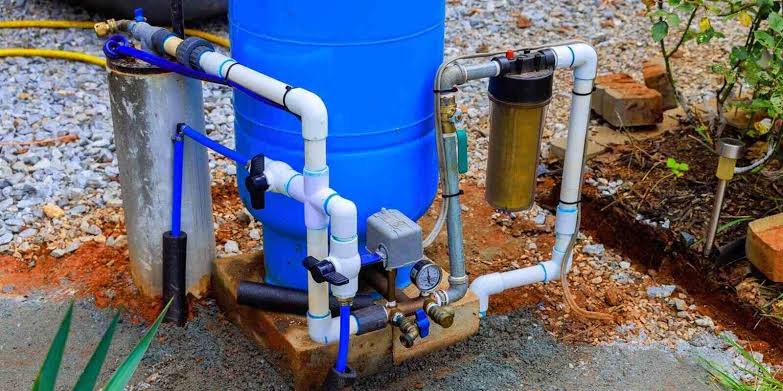
If your property relies on a private well, well water treatment should begin with appropriate testing. Once you know what’s actually present, it becomes much easier to choose equipment that addresses the problem instead of guessing.
Testing Is the Smart First Step
It’s tempting to shop for a filter as soon as something seems unusual. A cloudy glass of water or white scale on a faucet can send homeowners straight to the internet looking for answers.
But water problems aren’t always as straightforward as they look.
Hardness, for example, can cause scale and affect soap performance, while other water-quality issues may have completely different solutions. A filter designed to reduce sediment won’t necessarily solve a problem caused by dissolved minerals.
Water testing gives you a baseline. Depending on your water source and concerns, testing may examine hardness, pH, iron, manganese, chlorine, sediment, or other characteristics.
For private wells, periodic testing is especially important because water conditions can change with seasons, weather, land use, and other factors.
It isn’t glamorous, but knowing what’s in the water is far better than throwing money at random equipment.
What Residential Water Treatment Can Actually Do
For homeowners, water treatment is often about improving everyday comfort as much as anything else.
Hard water can leave stubborn deposits on faucets and shower doors. It may contribute to scale inside water heaters and appliances. Certain substances can affect taste or odor, making drinking water less appealing.
A properly selected residential water treatment system can address specific concerns throughout the home or at individual points of use.
Whole-home systems treat water as it enters the property, while point-of-use systems focus on places such as the kitchen sink. A water softener, meanwhile, serves a different purpose from a drinking-water filtration system.
Understanding these distinctions helps homeowners avoid a common mistake: expecting one device to do everything.
It usually can’t.
Different Treatment Technologies Have Different Jobs
Water treatment isn’t one single technology. There are several approaches, and each has a particular role.
Sediment filters are designed to capture particles. Carbon filtration is commonly used to improve taste and reduce certain odors. Water softeners are intended to reduce hardness. Reverse osmosis systems use a membrane-based process and are often installed for drinking-water treatment.
There are also specialized systems for specific water-quality conditions.
The important thing is matching the treatment method to the problem.
If a homeowner has mild taste and odor concerns, an elaborate treatment setup may be unnecessary. If testing reveals several water-quality issues, a more comprehensive approach could make sense.
A qualified professional can help interpret test results and explain the trade-offs between different systems.
Businesses Have Different Water Needs
A home and a business don’t use water in quite the same way.
An office might primarily need reliable drinking and restroom water. A restaurant may have concerns involving food preparation, dishwashing, equipment, and customer expectations. A manufacturing facility could have much more specialized requirements.
That’s where commercial water treatment becomes a different conversation.
Flow rates, operating hours, equipment requirements, local regulations, maintenance schedules, and water chemistry can all influence system selection. A commercial system needs to be sized appropriately for demand rather than simply scaled up from a residential product.
Businesses also have another concern that homeowners may not think about as much: downtime.
If treatment equipment fails in a commercial setting, it can interfere with normal operations. Preventive maintenance and dependable service therefore become part of the overall investment.
Maintenance Isn’t Optional
No water treatment system works indefinitely without attention.
Filters become saturated. Resin can require servicing. Membranes eventually need replacement. Valves, pumps, tanks, and fittings can wear out.
The maintenance schedule depends on the type of equipment and the condition of the incoming water. That’s why following manufacturer recommendations is important.
It’s also worth keeping simple records. Write down filter replacement dates, inspections, repairs, and any noticeable changes in performance.
This may sound overly organized, but when something goes wrong a year later, you’ll be glad you know what was done and when.
Watch for Changes in Performance
Your water system can give you clues before it fails completely.
A sudden drop in water pressure, unusual noises, persistent leaks, changes in taste or odor, or visible buildup can all be reasons to investigate.
Sometimes the solution is simple. A filter may simply be overdue for replacement. In other cases, a component may need professional attention.
Don’t assume that reduced performance means the entire system needs replacing. A proper inspection can help determine whether the problem is maintenance-related, mechanical, or something affecting the water itself.
Think About the Long-Term Cost
When comparing systems, don’t look only at the installation price.
Ask about replacement filters, electricity or water usage, routine maintenance, repairs, warranties, and the expected lifespan of major components.
A low-cost system can become expensive if replacement parts are hard to find or maintenance is frequent. At the same time, an oversized system can waste money if its extra capacity isn’t actually needed.
The best value is usually somewhere in the middle: equipment that solves the problem reliably without adding unnecessary complexity.
Better Water Starts With Better Information
Ultimately, choosing a water treatment system isn’t really about finding the fanciest equipment. It’s about understanding your water and making a sensible decision based on evidence.
Test first. Identify the problem. Consider how much water your household or business actually uses. Think about maintenance and long-term costs. And if you’re unsure, get advice from someone who can explain the options without drowning you in technical language.
Clean, dependable water is one of those things that quietly improves daily life. You notice it in the shower, in the kitchen, in your coffee, and even in how long your appliances last.
A thoughtful water treatment plan won’t necessarily be the most complicated one. Often, it’s simply the one that fits your property, your water, and your routine — and keeps doing its job long after the installation crew has packed up and left.